
by Assan Sallah .
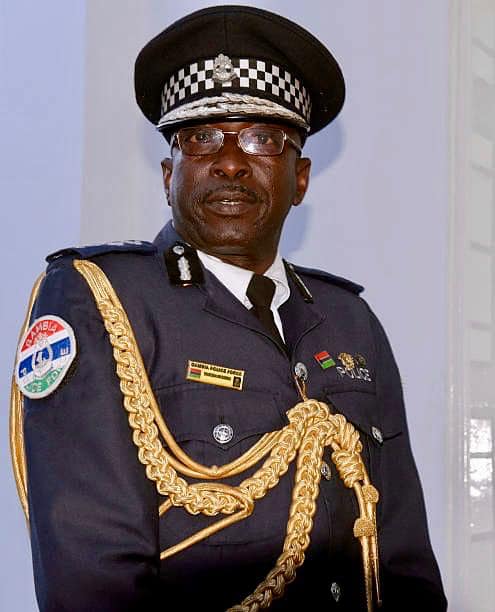
I read with deep concern, the statement published on 8th May 2026, by Madi Jobarteh, the Executive Director of the Edward Francis Small Centre for Rights and Justice (EFSCRJ), urging the Gambia Government to revoke the appointment of Hon. Yankuba JN Sonko, as Chairman of the Local Government Commission Service due to recommendations made in the Government White Paper on the TRRC report.
Additionally, another article was published by Journalist Sanna Camara on his media platform Mai Media, in which the Alliance for Victim-Led Organizations (AVLO) urged the Gambia Government to publish any findings of investigations into the alleged role of Yankuba Sonko. The article was titled: “Victims Demand Gambia to immediately publish findings of any investigation into the alleged role of Yankuba Sonko”.
The Voice Newspaper in The Gambia also published an article titled: “AVLO Raises Concern Over Yankuba Sonko’s Appointment” in its news edition of 8th May 2026.
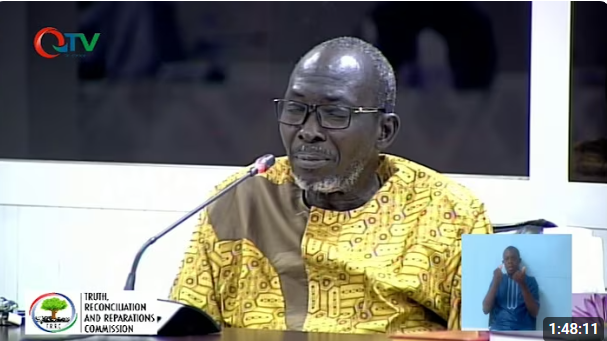
One thing that the TRRC has proven is that not everyone who headed an institution under Jammeh’s regime has acted in any manner that constitutes crimes against humanity. There are so many recommendations in the Government White Paper that if presented before any court of law, will not be proven beyond any reasonable doubt. We have seen that most of these tortures were carried out by the NIA, the jungulars and some people who were reporting directly to the former president Yahya Jammeh and that is why even before the TRRC recommendation, some of them were individually dragged to court. This is also the reason why we have seen successful prosecutions of people accused of human rights violations in the US , Germany , Switzerland and in The Gambia soon.
There was no evidence before the TRRC that the police institution was used for any torture or human right violations during Mr. Sonko’s time as IGP.
Activism requires fairness. There are recommendations from the TRRC against some people for merely heading an institution or department. Activism does not require one to support every recommendation. It requires justice and due process for both the accused and the victims. Justice for the victims is for the real perpetrators to be punished, not just anyone.
I agree with the statement that victims deserve respect and justice must be served, but we should ask ourselves who are the victims that Yankuba Sonko allegedly harmed? Absolutely none! There was no evidence before the TRRC suggesting that he had harm someone. As activists you cannot use the victim’s predicament to fight your own wars. Yankuba Sonko did not harm any victim, instead, he is one rare senior officer who had always stood by the victims under Jammeh’s rule. He was a senior officer who was always on the side of the people, supporting, guiding and counselling them. The evidence is clear and I am one victim of the Jammeh regime who was greatly assisted by Yankuba Sonko while he was Inspector General of Police. This was a time when almost everyone avoided me including many journalists, some of whom were GPU Executives at the time.
Many senior government officers who were banned from holding public office never challenged TRRC report and are still in their respective positions. Among the banned officials, only Mr Sonko challenged the report.
Why are the local rights groups silent about those who still maintain their positions?
Is it because Mr. Sonko challenged the report against him as malicious and unreasonable?
Besides, Yankuba Sonko (then IGP) and Lt. Gen. Ousman Bargie, former Chief of Defence Staff (CDS) of the Gambia Armed Forces (GAF), both played a key role in supporting the coalition Government of President Barrow to ensure smooth transition to democratic rule. Despite Yahya Jammeh’s threats at the time, these senior officers risked their lives and that of their families and stood by the people against Jammeh. He fulfilled his duty to protect the coalition after victory and tactfully provide security and facilitated the movement of the president-elect until his departure to Senegal. In the absence of the President-Elect, Mr Sonko continued to coordinate activities with Hon Halifa Sallah, the former Spokesperson of the coalition government until the return of the President. Where were the activists during the impasse?
It is too early to forget what Mr Sallah, IGP Yankuba Sonko and CDS Ousman Badjie had done in ensuring that we do not go into a war. Let’s find out what prevented Gambia from civil war during the impasse. I hope Halifa Sallah’s anticipated book “the impasse “ will clear doubt as to what Mr Sonko and our gallant officers had done during the impasse. Without their intervention and support, things could have been more complicated, serious problems could have happened in the country and we would have had a long walk before the reaching this journey of freedom that we are all enjoying today. Hon. Sallah is a living witness and can attest to this and many more support and interventions done by IGP Sonko in their favour. Watch out for Halifa Sallah’s book on the Impasse which will be launched soon this year Insha’Allah.
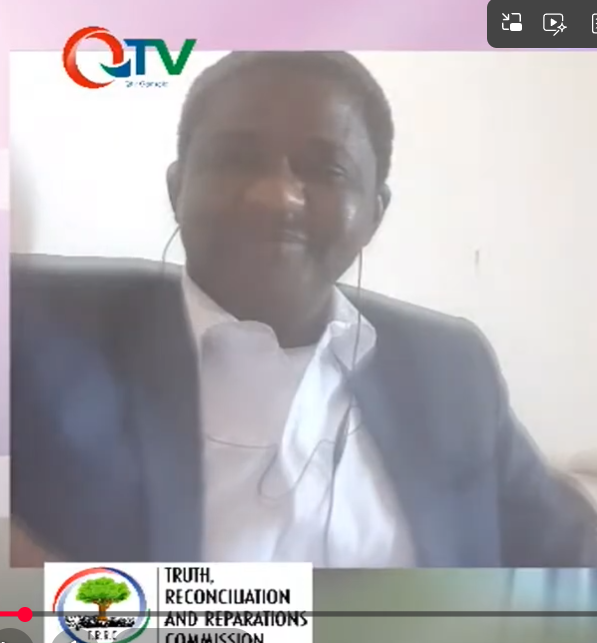
Mr. Sonko in his closing remarks at the TRRC avoided talking much about what actually happened behind the scenes during the impasse and said he does not want to pre-empt the much anticipated book of Hon Sallah.
Yankuba Sonko is the longest serving IGP under Yahya Jammeh’s regime. He became IGP in March 2010 following the arrest and detention of Ensa Badjie, former IGP. He served as IGP until 2014. He bounced back as IGP in July 2015 and served until 2017 when President Barrow appointed a new IGP. Throughout his career, Yankuba Sonko has always maintained standards, professionalism and respect for human rights and the rule of law (I refer readers to the TRRC hearing of Momodou Sabally and Justice Ebrima Jaiteh).
Therefore, the Edward Francis Small Centre for Rights and Justice and the Alliance for Victim-Led Organizations should be reminded that instead of pointing fingers at Yankuba Sonko alone, they should stop being economical with the truth and shift the blame on the government for neglecting the entire TRRC recommendation, victims’ compensation and the necessity in delivering justice.
To avoid been selective or biased, the EFSCRJ and AVLO should have also debunked the appointments of other officers and officials who were recommended to be banned from public office or reprimanded by recommendations from either the TRRC or Janneh Commission.
ON THE ALLEGATIONS OF ALLEGED COVER-UP OF THE INVESTIGATIONS INTO THE KILLING OF WEST AFRICAN MIGRANTS:
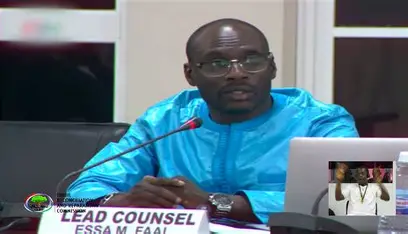
During his testimony before the Truth, Reconciliation and Reparations Commission (TRRC) Yankuba Sonko gave exculpatory testimony and supported it with exculpatory documentary evidence which proved that he was in The UK doing his Bachelor’s degree programme in 2005 when the said West African migrants were arrested in The Gambia and killed. It could be recalled that during his TRRC appearance, the lead counsel Essa Faal avoided proper introduction of Mr Sonko, claiming that it will be time consuming he wants to go into CV of Mr Sonko. He only confirmed that Mr Sonko had served the Police for a long time with lots of experience. Was he trying to conceal Mr Sonko’s absence from The Gambia during the period (2003 – 2007) in question? Mr. Sonko, being an intelligent officer and knowing what the lead counsel was deliberately trying to hide, told the commission that he was out of the jurisdiction and provided necessary document to support his assertion. What would have happen if he had not tactfully introduced this fact ( his absence) in his testimony).
I am of the opinion that there was a foul play by tainting Yankuba Sonko’s image and clearing those who should have been held responsible like Police Commissioner Biran Mbaye.
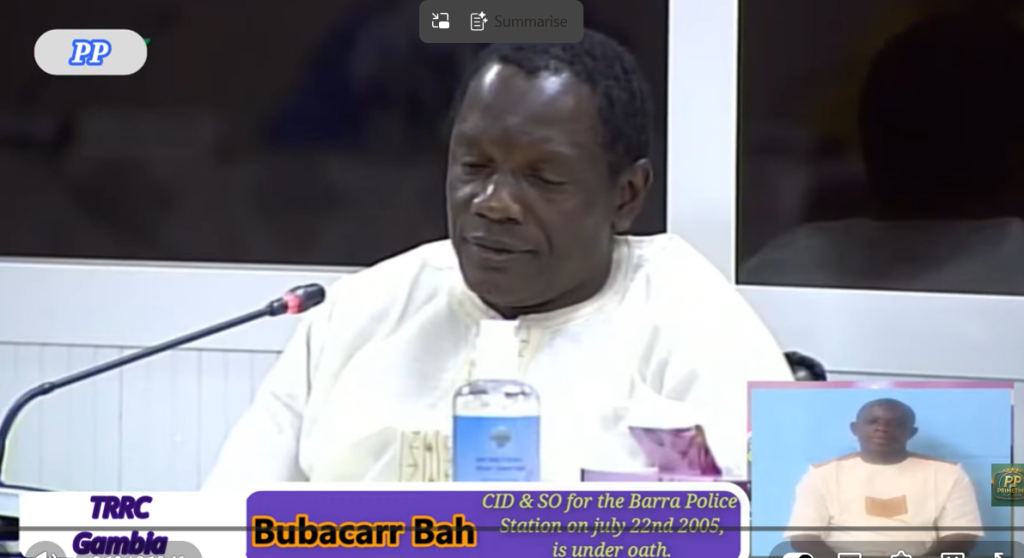
During the TRRC hearings, Commissioner Biran Mbaye, Aziz Hydara (now late) and Bubacarr Bah were the witnesses who mentioned Yankuba Sonko, accusing him of covering -up diaries to mislead UN investigators who came into the country in 2008.
Biran Mbaye was the Commander of the armed unit of the Gambia Police Force; the Police Intervention Unit (PIU) in 2005; Aziz Hydara was a senior NIA officer at Intelligence Head Office in Banjul in 2005 and Bubacarr Bah was the Assistant Station Officer of Barra Police Station in 2005.
To start with, as a matter of fact, all the three TRRC witnesses who tried to tarnish Yankuba Sonko’s image either had a misunderstanding with him previously or hold grudge against him or was/were made to put up false allegations against him, in order to exonerate themselves from any responsibility linking them to the incident of the West African migrants.
BIRAN MBAYE:
During his testimony before the TRRC, Biran Mbaye alleged that the late Nfally Jabang, an alleged Jungular and former soldier at the State Guards allegedly threatened him in the presence of Yankuba Sonko that he should not say anything to the investigators that would incriminate the government of the Gambia. Biran Mbaye also claimed that Yankuba Sonko requested for the PIU Station Diary and extracted some pages from it. He said Yankuba returned the diary to them with some tampered pages.
Coming back to the TRRC proceedings, there was evidence that Biran Mbaye was the Commander of the PIU in 2005 when the said West African Migrants were arrested. There was also evidence that he (Biran Mbaye went in person to receive the arrested migrants at the Port of Banjul and some of them were detained under his custody at the PIU headquarters in Kanifing.
Why was Biran Mbaye not liable for facilitating the detention and handing over of arrested persons to be killed?
During the TRRC testimonies, there were reports indicating that some dead bodies of these migrants were found at the sea side in Brufut. How did they get to that place unnoticed when they were first detained at the PIU?
TRRC evidence revealed that upon the discovery of the bodies around Brufut, Commissioner Biran Mbaye was the first person to be informed and he impulsively ordered immediate burial of the corpses (Readers are referred to the video link testimony of one of the officers based in the diaspora). Is that the normal practice?. No, he ordered so because he was aware of the circumstances. Yet the TRRC remained silent on this officer? Definitely, something somewhere must have gone wrong!
As a responsible Commander, Biran Mbaye should have been able to provide the TRRC with details of whosoever collected the arrested migrants under his custody from the PIU. He should have given name(s) of the individuals who came for them, the description of the vehicle(s) , vehicle registration number, driver, escorts, the time at which they were picked up, where they were heading to, the number and identity of detainees collected, etc and any other necessary feedback.
BUBACARR BAH:
This is the man who Yankuba described as a liar during his testimony before the TRRC. Yankuba had the opportunity to respond to allegations made by Bubacarr Bah because Bah testified before Yankuba at the TRRC.
He told the TRRC that Yankuba told him that the UN investigators will be given alcohol and women so that they will not be able to write anything against the Gambia. However, Yankuba denied these allegations and branded officer Bah as a liar. Sonko said he invited Bah to his office in 2008 as the Crime
Management Co-ordinator at the time and asked about the Station Diary where details of the migrants were stated because the investigators wanted to see all that. He said Bah replied that the Diary was requested by Ousman Sonko, former IGP who later became Minister of Interior.
Sonko testified that he also asked Ousman Sonko and he was referred to the late Numo Kujabi who at the time was at the Interpol. Numo is also a one-time Director General of the NIA. The TRRC witness Bubacarr Bah was reported to have credibility problems.
Readers should know that Bah was interdicted before his testimony at the TRRC and was undergoing investigation in the alleged Diplomatic passport saga in 2019. He was the officer who was seen in a video recording, receiving large amount of money for an alleged Diplomatic Passport transaction.
Additionally, officer Bah was also allegedly involved in a bribery and corruption case sometime in 2006 whilst he was on posting at Siffoe Police Station. He was interdicted in that case too. His interdiction was lifted by Yankuba Sonko in 2010 when he was appointed as IGP and Bubacarr Bah continued his job.
AZIZ HYDARA:
Aziz Hydara told the TRRC that Yankuba Sonko was promoted to the rank of Inspector General of Police due to his participation by leading the investigators as CMC but this was wrong information. Police records are there to tell Mr Sonko’s career progression. Yankuba Sonko was promoted from the rank of Commissioner to Deputy Inspector General of Police following the arrest and detention of former DIG Modou Gaye. Again, Yankuba became IGP in 2010 following the arrest and detention of the former IGP Ensa Badjie. Therefore, he was not promoted directly from Commissioner rank to IGP and he was never promoted based on his participation as alleged.
THE DIARIES:
Regarding the diaries, Aziz Hydara said the diaries were tampered under the supervision of Yankuba Sonko, whilst Biran Mbaye said Yankuba Sonko tampered with the PIU Diary. This too is confusing and something doesn’t add up here.
Other witnesses such as Malamin Ceesay, Jawara Demba and Lamin Cham, all informed the TRRC that the Diaries were tampered with in 2005 during the tenure of former IGP Ousman Sonko and in that case, it is clear that Yankuba Sonko has no hand in it because he was in The UK from 2003 to 2007 doing his Bachelor’s of Law Degree. In this circumstance, one would be compelled to ask if the diaries were changed or tampered with in 2005 to cover up the disappearance of the arrested migrants, why would there be a necessity to tamper with them again in 2008/2009 when the investigators arrived in the country?
TRRC Recommendation Report (ban period)
Insiders at the TRRC and Ministry of Justice also hinted that initially, the TRRC recommended for Yankuba Sonko to be banned from public office for a far lesser period, but the clique used a lawyer (name withheld for now) to change it to ten years before submitting the document to the Gambia Government officially. All these actions were melted on Mr. Sonko for ulterior motives or reasons we all know. This clique includes certain TRRC Officials and other individuals we know. From all indications, it was clear that Yankuba Sonko was a target of this clique for reasons best known to them. Following the testimonies of Biran Mbaye and Aziz Hydara, the TRRC should have recalled Yankuba Sonko to respond to their allegations against him, but this was not done. His right to fair trial was violated. The Lead Counsel made a serious mistake on that part. He should have called Biran Mbaye and Aziz Hydara to testify first before Yankuba, knowing that he was the subject.
In his testimony, Mr. Sonko also refuted claims by Bubacarr Bah regarding the investigators and said people of such high calibre will not be influenced by women and alcohol as claimed while executing their duties. At this point, the Lead Counsel Essa Faal interfered and said the investigators can be influenced. Therefore, if the lead counsel believed the UN investigators can be influenced then it means he too can be influenced despite his status. The TRRC in its conclusion stated that Mr Yankuba Sonko had been involved in the cover-up of the killing of West African Migrants since 2005.
Finally, Essa Faal himself told Yankuba Sonko before the beginning of his testimony that he was called at the TRRC as a witness but not because he was adversely mentioned or has committed any human rights violation (I refer readers to the introduction of the testimony of Yankuba Sonko part1 ).
How can somebody who had not been around from 2003 to 2007 be involved since 2005? The TRRC cannot play with people’s intelligence. There is a serious descriptive error in the statement. This is really an attempt to deceive people. The premises of their argument did not in any way support the conclusion, therefore this is an unsound argument made purposely to deceive readers into believing that Mr Sonko was around in 2005 when it was very clear to them in evidence that he was out of the jurisdiction of The Gambia.
SOME OF THE ACHIEVEMENTS OF YANKUBA SONKO AS IGP FROM 2010 – 2017
IGP Sonko has inculcated discipline and standard into the police force. During his time, his management would promote officers based on merit. He set up length of stay on rank criteria and candidates must pass written and oral examination on their respective job area. Skilled officers are tested on their respective fields whilst General Duty officers on their field.
There was a police bus service with almost nine buses purchased without the support of the Government. During his time , police officers commute with these buses to their duty posts at a minimal cost of not more than 100 dalasis a month.
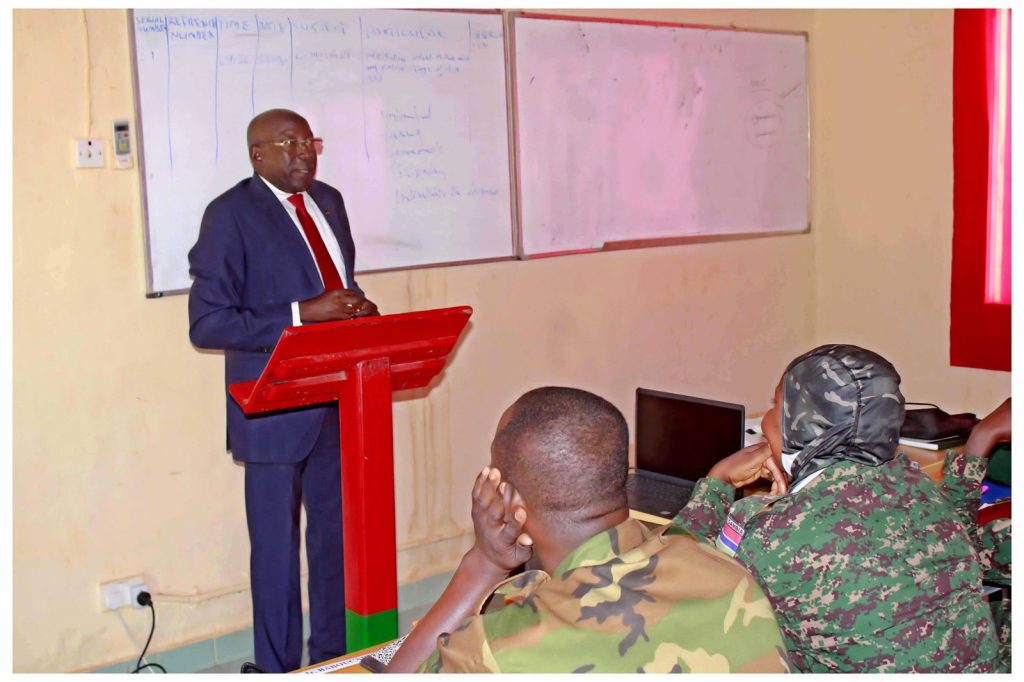
Several police stations were built or renovated either from police funds or by individuals, communities, and/or private companies during Yankuba Sonko’s tenure as IGP, thanks to his foresight and intervention.
Like I stated in an article I wrote in 2022 regarding some of the achievements of Yankuba Sonko as IGP, the Bakoteh, Ndungu Kebbeh, Bureng, Kerr Jain Police Stations, and Barra Police Quarters were all built from the police fund, whilst the Wellingara Police Station was a joint project of the police and the community.
The Brikama Salanding Police Station was built from the police fund, supported by one Mr. Ali, a contractor. The Police Band (band house) was built from the police fund with the support of Guaranty Trust Bank; Kabafita Police Station was built by Hamidou Jah of Jah Oil; Brusubi Police Station was built by Africell, the Old Jeshwang Police Station was built by Boy Conteh, while the Basse Police Station and Quarters, Yundum Police Station, the Police Garage, Kaur, and Kuntaur Police Stations were renovated from police funds.
All the above-mentioned projects were achieved during former IGP Yankuba Sonko’s tenure. Moreover, Yankuba Sonko initiated the purchase of 60% of the police uniform supplies and 35% of police vehicles from the police funds during his time as IGP.
In 2019, he wrote a book titled “Code of Conduct for Security Services under the Ministry of Interior”. This book was also presented to the TRRC and serves as a guide for security officers in their day-to-day duties. He also contributed immensely to the drafting of the new Police Bill which was validated in 2024 but is yet to adopted by Deputies at the National Assembly.
In a nutshell, Yankuba Sonko is one of the best IGPs under the Second Republic including the Barrow regime. Equally, he is one the best Interior Ministers under the Second Republic including the Barrow administration. His level of professionalism, knowledge in the security sector, experience, legal background, pragmatism, etc is unmatched.
In all honesty, Yankuba Sonko stands as an honest, hardworking, committed, humble, well experienced, professional and patriotic senior officer. He is a man of pragmatic personality, integrity and honour.
He has served the Gambia Police Force diligently and with dignity and great honour. He rose through ranks to the highest rank within the force and has achieved a lot which many have not been able to achieve. Unlike others, Yankuba Sonko deserves to be celebrated and awarded for his sacrifice for the nation instead of calling for the revoke of his appointment.