

Lamtoro News Editor
By Alagi Yorro Jallow
Fatoumatta: Lamtoro News editor Assan Sallah’s report on the Bullock Military Camp incident is not merely a news story; it is a mirror held up to the Gambian state, revealing structural weaknesses long ignored, political complacency long tolerated, and a defense architecture that has been allowed to decay under the illusion of external protection. His analysis is one of the rare moments in Gambian journalism where security reporting rises above emotion, partisan noise, and press‑release journalism. It is interpretative journalism at its finest sober, factual, and unflinching.
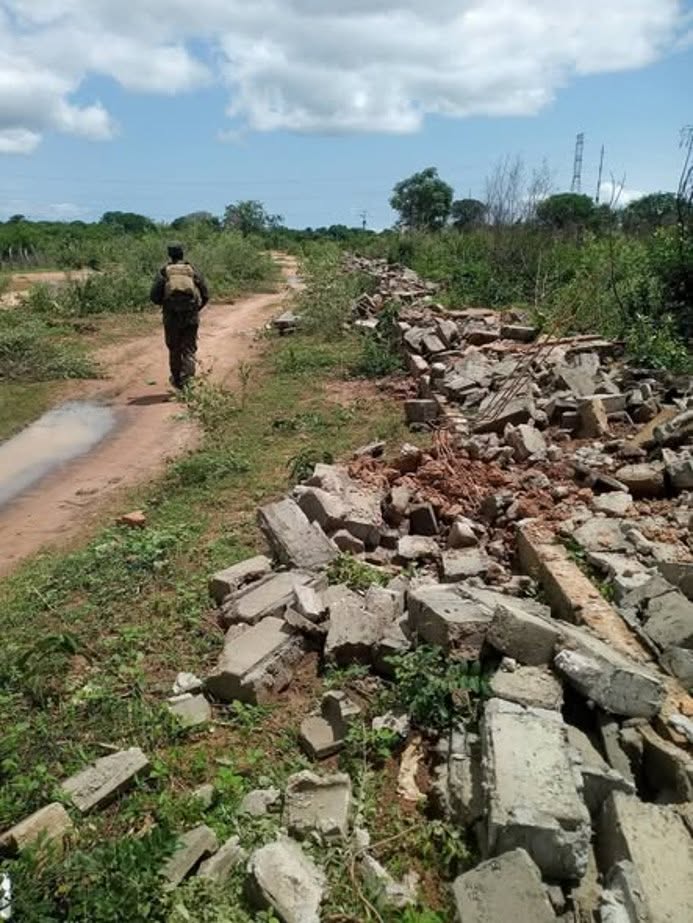
The demolition of the Bullock Military Camp fence by Senegalese forces is more than a border incident. It is a geopolitical message, a revelation of Gambian vulnerability, and a reminder of how African border asymmetries shape power. This long-read, building on Assan Sallah’s reporting, examines the Bullock confrontation as a test of Senegambia’s imbalance and the fragility of small states.
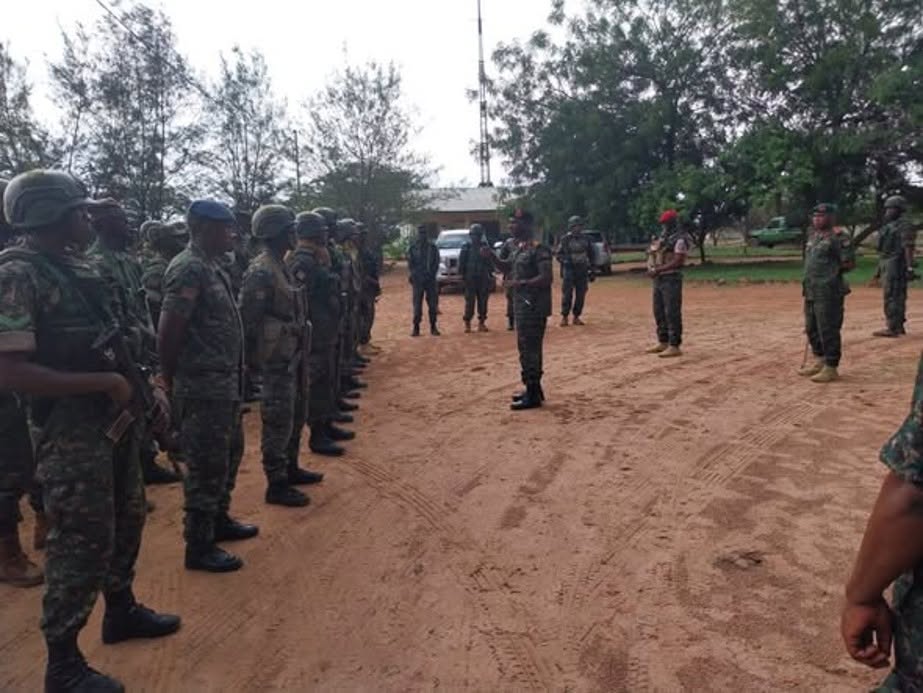
The Senegalese demolition of the Bullock fence is not an isolated act. It is a symptom of a deeper imbalance in the Senegambia relationship — an imbalance that Gambian political elites have refused to confront. Sallah’s reporting makes this clear. He notes that Senegalese forces arrived twice, the second time “with bulldozers and heavy weapons prepared to attack the Gambian soldiers,” and that Gambian troops were instructed to exercise restraint. This restraint prevented bloodshed, but it also exposed a painful truth: The Gambia’s military is not equipped to defend its own installations, let alone its sovereignty.
Fatoumatta: Assan Sallah’s article’s strength lies in its ability to weave historical context into the present crisis. Sallah reminds us that the Bullock and Foni military posts were established under Yahya Jammeh for border control, anti‑trafficking operations, and regime protection. Yet even then, “no proper security structures, personnel, vehicles and weapons required were in place.” Jammeh fortified Kanilai and State House, not the nation. The current government, Sallah notes, “did little effort to improve the situation.” This continuity of neglect is the real scandal.
The demolition itself is described with precision and restraint. Gambian soldiers initially blocked the Senegalese, but when the Senegalese returned with superior force, the Gambians had no operational capacity to resist. Major Mbemba Jarjue’s actions confronting the Senegalese, contacting the top brass, and even following the Senegalese “up to their base in Casamance” demonstrate individual bravery in the face of institutional weakness. Sallah’s reporting captures this heroism without romanticizing it.
What elevates the article is its interpretative depth. Sallah does not merely recount events; he interrogates timing, political motives, and diplomatic signals. He notes that Senegal launched the demolition “on the eve of the return of their former President Macky Sall,” raising the possibility of political distraction or internal signaling. He observes that President Diomaye Faye met President Barrow days earlier, and that border issues were discussed. Yet Senegal proceeded with unilateral action. This is geopolitical messaging, not coincidence.
Sallah’s most damning insight comes from the soldiers themselves. One soldier states plainly: “The reality is that the government doesn’t care about the military.” Another notes that GAF lacks operational vehicles, that State House routinely commandeers military trucks for political tours, and that Mauritania‑donated vehicles sit idle. These are not anonymous complaints; they are indictments of a defense policy that has substituted symbolism for substance.
The article packs a strong call to action. Sallah insists that President Barrow should “invest heavily in the armed forces,” build international defense partnerships, and move away from depending on ECOMIG. He cautions that Senegal “will not give up on its sovereignty” and questions whether The Gambia is ready to assert its own. His final remark is stark: “If we don’t want to invest in our defense sector appropriately, then it is better we give up on our sovereignty.” This is the logical outcome of the facts he lays out.
Assan Sallah has put together one of the most thorough, fair, and well-organized security analyses in recent Gambian journalism. His work shows that evidence-based, thoughtful reporting is key to holding leaders accountable in a democracy. He’s proven that journalism can shed light on national weaknesses without stirring up unnecessary tension, and that it’s possible to call out government shortcomings without falling into political drama. This is the kind of reporting that truly serves the nation.
Before diving into geopolitics, it’s worth recognizing the standout journalism that brought this incident into clear national view. In a media landscape often filled with press‑release rewrites, heated reactions, and partisan showmanship, Assan Sallah of LamToro News sets himself apart. His reporting on the Bullock Military Camp demolition is a prime example of interpretative journalism calm, factual, and carefully organized.
Assan Sallah’s report is more than a narrative of events; it is a diagnostic scan of Gambian state capacity. The Senegalese demolition of the Bullock fence exposes structural weaknesses long ignored and political complacency long tolerated. It reveals a defense architecture that has been allowed to decay under the illusion of external protection.
The Senegalese forces arrived twice. The second time, they returned “with Bulldozer and heavy weapons prepared to attack the Gambian soldiers.” Gambian troops were instructed to exercise restraint — not because restraint was a diplomatic strategy, but because resistance was impossible. The Gambia’s military lacked the operational capacity to defend its own installation.
Sallah’s historical context is damning. The Bullock and Foni military posts were established under Yahya Jammeh not for national defense but for regime protection. “No proper security structures, personnel, vehicles and weapons required were in place.” Jammeh fortified Kanilai and State House, not the nation. The current government inherited a hollowed‑out defense architecture and did little to rebuild it.
Sallah’s interpretative depth is what elevates the report. He interrogates timing, political motives, and diplomatic signals. Senegal launched the demolition “on the eve of the return of their former President Macky Sall,” a politically sensitive moment. President Diomaye Faye knew he would meet President Barrow at the ECOWAS Summit two days later. Yet he proceeded with unilateral action. This is not a coincidence; it is geopolitical messaging.
The soldiers’ testimonies are the most damning. One soldier states plainly: “The reality is that the government doesn’t care about the military.” Another notes that GAF lacks operational vehicles, that State House commandeers military trucks for political tours, and that Mauritania‑donated vehicles sit idle. These are not anonymous complaints; they are indictments of a defense policy that has substituted symbolism for substance.
Sallah concludes with a chilling warning: “If we don’t want to invest in our defense sector appropriately, then it is better we give up on our sovereignty.” This is not hyperbole. It is the logical conclusion of the facts he presents. The demolition of the Bullock Military Camp fence is not simply a border dispute. It is a geopolitical event that exposes the structural asymmetry between Senegal and The Gambia.
The Gambia is one of Africa’s most geographically vulnerable states, a narrow enclave carved into Senegal’s territory by British colonial design. Senegal surrounds The Gambia on three sides. This is not merely geography; it is destiny. Senegal’s security doctrine has always treated The Gambia as a strategic corridor, a buffer zone, and a potential vulnerability.
The Casamance conflict has made Senegal hypersensitive to Gambian military activity near its southern flank. Bullock sits precisely in this zone. When Senegalese soldiers claimed that “the military fence is in their country’s territory,” they were asserting strategic control over a space they consider essential to their national security.
Across Africa, smaller states or enclaves navigate the ambitions of larger neighbors. Lesotho depends on South Africa for stability. Djibouti’s security posture is shaped by Ethiopia. Eswatini’s political survival is tied to Pretoria. Benin’s economy was devastated by Nigeria’s unilateral border closure. South Sudan’s border realities are shaped by Sudan’s military posture. The Gambia’s situation mirrors these cases: a small state whose security posture is shaped by a larger neighbor’s strategic imperatives.
Casamance is the lens through which Senegal views The Gambia. The MFDC insurgency has used Gambian territory for refuge and movement. Senegal has always viewed Gambian border posts with suspicion. The demolition of the Bullock fence must be understood in this context. Senegal’s message is clear: Any Gambian military infrastructure near Casamance will be monitored, challenged, and, if necessary, dismantled.
Senegal launched the demolition “on the eve of the return of their former President Macky Sall.” President Diomaye Faye knew he would meet President Barrow at the ECOWAS Summit two days later. Yet he proceeded with unilateral action. This timing reflects three geopolitical calculations: Demonstrating internal strength, testing Gambian resolve, and framing the ECOWAS meeting on Senegal’s terms.
ECOMIG’s presence weakens Gambian military autonomy. As one soldier noted, “Senegal is convinced that we will be easily overrun since they are occupying our State House and other strategic places.”
The force meant to protect Gambian stability has become a symbol of Gambian dependency. Across Africa, sovereignty is not merely a legal status; it is a capability. A nation that cannot defend its borders cannot claim full sovereignty. A nation that relies on external forces for internal security cannot claim strategic autonomy. A nation whose military is under-resourced cannot deter aggression. Senegal’s demolition of the fence was not just an act of force; it was a geopolitical message: Strength respects strength. Weakness invites pressure.
Sallah, the editor of LamToro News, stands out as the leading expert on security issues among Gambian journalists. Unlike others who depend solely on official statements, he digs deeper, exploring the context, history, military strategies, and diplomatic timing behind events. His fearless analysis of the Senegambia border dispute is both detailed and courageous, exemplifying journalism that truly serves the Republic. This commentary and geopolitical analysis build on the foundation he has established, demonstrating the vital role of independent journalism in understanding complex issues.
Fatoumatta: Assan Sallah’s reporting delivers the facts to The Gambia, while his commentary explains their meaning. His analysis connects those facts to broader trends across Africa, sending a clear message: sovereignty isn’t protected by diplomacy alone, but by capacity, clarity, and courage.