
Fatoumatta: Musa Bassadi Jawara’s claim that Donald Trump will “handpick” the next UN Secretary‑General is not only false but diplomatically impossible. It exposes a deeper collapse in Gambian intellectual culture, where confidence increasingly substitutes for knowledge and misinformation is delivered with the tone of expertise. The UN Charter, history, and basic fact all contradict this assertion, and the nation must confront the growing danger of pseudo‑intellectualism before it becomes our new normal.
By Alagi Yorro Jallow .
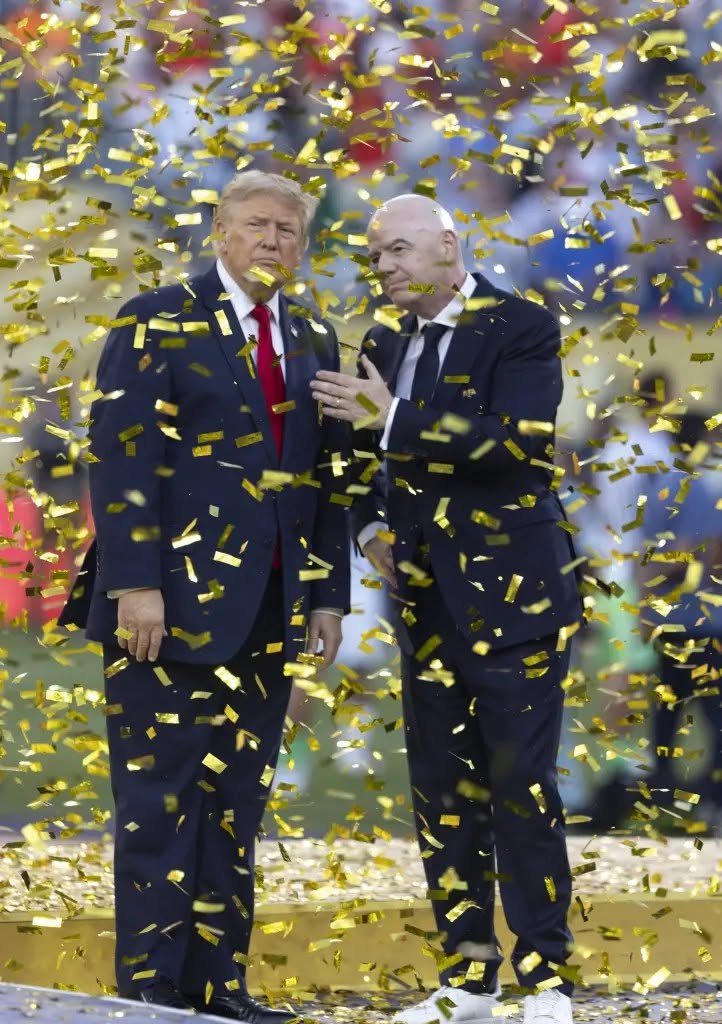
The Gambian public sphere is suffering from a profound intellectual decay. Social media, once heralded as a platform for democratic expression, has instead become a theatre where ignorance performs confidently and misinformation is dressed in the robes of expertise. The most troubling voices are not the uneducated; they are the credentialed, the self‑styled analysts, the authors and economists who speak with authority but without evidence. Their confidence is not built on knowledge, but on the illusion of knowledge, and nowhere is this more visible than in Musa Bassadi Jawara’s recent claim that President Donald Trump will “handpick” the next United Nations Secretary‑General.
Fatoumatta: This assertion is not merely incorrect. It is diplomatically impossible, historically uninformed, and legally indefensible. It collapses under the weight of the UN Charter, the history of multilateral diplomacy, and the basic structure of international governance. It is the kind of claim that reveals not just a misunderstanding of global politics, but a deeper crisis: the rise of pseudo‑intellectualism in Gambian discourse.
To understand the magnitude of Musa’s error, one must revisit the origins of the United Nations itself. In 1945, as the ashes of the Second World War settled, the architects of the UN were determined to prevent the unilateral domination that had crippled the League of Nations. They created a system built on balance, consensus, and legal constraint. The office of the Secretary‑General was deliberately insulated from the whims of powerful states. The selection process requires a recommendation from the Security Council and approval from the General Assembly. The five permanent members, China, France, Russia, the United Kingdom, and the United States, each possess veto power, ensuring that no candidate can advance without broad geopolitical agreement.
But equally important is the inverse: no single country can impose a candidate. The United States cannot appoint a Secretary‑General. It cannot bypass the Security Council. It cannot override the General Assembly. It cannot install a FIFA president or any other figure by fiat. The system was designed precisely to prevent the kind of unilateralism Musa imagines.
History reinforces this point. In 1950, the Soviet Union vetoed Trygve Lie’s reappointment. In 1996, the United States vetoed Boutros Boutros‑Ghali despite overwhelming global support. In 2006, China and Russia blocked candidates until a consensus emerged around Ban Ki‑moon. In 2016, the public hearings introduced by Mogens Lykketoft further democratized the process. At no point in the UN’s 81‑year history has any president — American or otherwise — “handpicked” a Secretary‑General.
Musa’s claim collapses not only under law and history, but under basic fact. Yesterday in New York, six official candidates participated in the public debate: Michelle Bachelet, Rafael Grossi, Rebeca Grynspan, Macky Sall, María Fernanda Espinosa Garcés, and Carolyn Rodrigues‑Birkett. These are seasoned diplomats and former heads of state. Gianni Infantino, the FIFA President, was not on the stage. Any member state has nominated him. He has not submitted a vision statement. He has not undergone vetting. He is not part of the process.
The rumor that Trump “likes” Infantino originated from a tabloid outlet, not from diplomatic channels. Neither the White House nor Infantino has confirmed any interest. And even if Trump privately admires him, admiration is not an appointment. The United Nations is not a private corporation. It is a multilateral institution governed by law, not by presidential whim.
Fatoumatta: What Musa presents as analysis is, in truth, a fiction wrapped in the language of authority. It reveals a deeper problem in Gambian intellectual culture: the collapse of critical thinking. We are witnessing the rise of individuals who have mastered the aesthetics of knowledge, eloquence, confidence, and credentialism, without acquiring the substance of knowledge. They write with the tone of expertise but without the discipline of research. They present conjecture as fact, and emotion as geopolitical insight. They weaponize ignorance because it flatters their insecurities and feeds their desire to appear informed.
Social media has amplified this crisis. It has given a megaphone to those who do not read, do not verify, and do not think critically. It has empowered individuals who challenge the educated not with evidence, but with bravado. It has created a culture where misinformation is rewarded with applause, and where the simplest facts of international governance are distorted to serve personal narratives.
The Gambia must confront this crisis honestly. We cannot afford a public sphere where the uninformed challenge the educated with confidence, where ignorance is celebrated as insight, and where international law is rewritten on Facebook timelines. The selection of the UN Secretary‑General is not a matter of opinion. It is a matter of law, history, and diplomatic practice. To misrepresent it is not merely careless; it is irresponsible. The truth is simple and indisputable. The debate took place. Six candidates participated. Infantino did not. Trump cannot appoint anyone. The process is multilateral. Musa’s assertion is false.
Fatoumatta: Social media has exposed many things in our society, our insecurities, our pretensions, our intellectual gaps. But it has also given us an opportunity. It has revealed the urgent need for critical thinking, reading, verification, and intellectual humility. If we fail to seize that opportunity, we risk becoming a nation where misinformation is not the exception but the norm, and where the loudest voices are the least informed. The Gambia deserves better. The youth deserve better. The truth deserves better.