
Fatoumatta: Less than two weeks after striking Nigeria, the United States has now seized Nicolás Maduro, the president of Venezuela and his wife in dramatic moves that reveal a deeper shift in Washington’s worldview. In November 2025, the White House released a National Security Strategy that openly revives the Monroe Doctrine, a 19th‑century policy that declared the Western Hemisphere an American sphere of control.
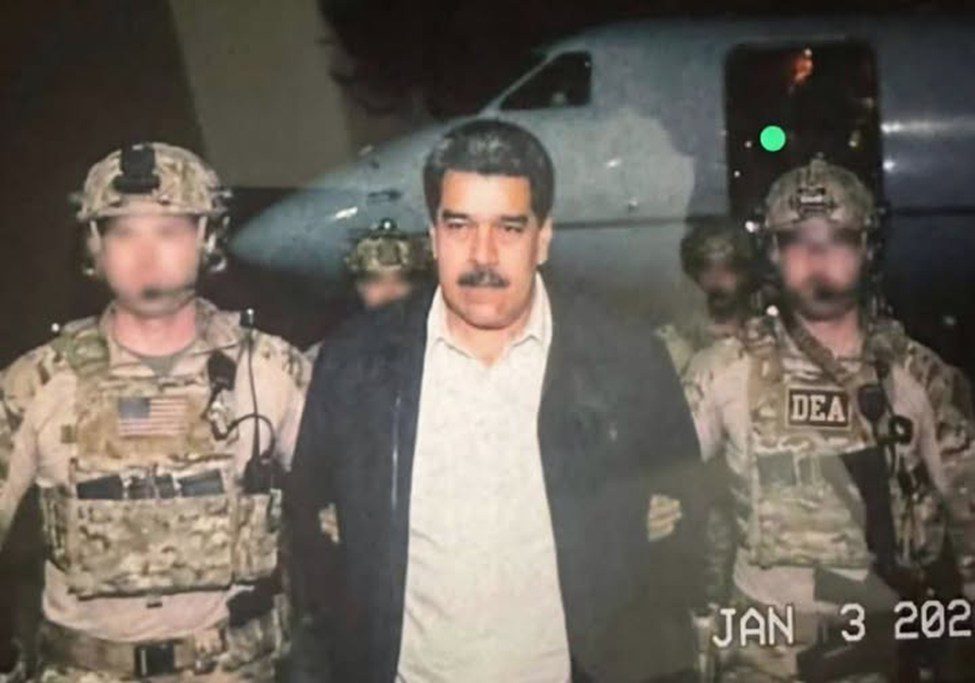
For those unfamiliar, the Monroe Doctrine was introduced in 1823. It warned European powers against interfering in the Americas. Over time, however, it evolved into a justification for U.S. interventions, coups, and regime changes across Latin America. It became the ideological backbone of American dominance. Its message: “This hemisphere is ours.”
The new strategy resurrects that logic in modern language. It declares that the United States must maintain “exclusive influence” across North, Central, and South America, the Caribbean, and the surrounding oceans. In practice, this means controlling access to oil, minerals, and rare earths; binding countries to American technology; and shaping their domestic and foreign policies to block China and Russia. Strip away the diplomatic phrasing, and the picture is unmistakable: this is colonialism in a new uniform.
Forget the slogans about drugs in Venezuela. Forget the speeches about terrorists in Nigeria. The real drivers are oil, minerals, and strategic competition. Venezuela holds the world’s largest proven oil reserves. Nigeria is a major energy producer and a key battleground for influence in West Africa, where Russia has been expanding its footprint. These are the stakes, not the moral narratives offered for public consumption.
Fatoumatta: What troubles me most is that many educated people support these actions as “decisive leadership.” They often have not read the National Security Strategy, do not understand the Monroe Doctrine’s history, and do not realize that the post-1945 international order, intended to restrain unilateral aggression, is being eroded.
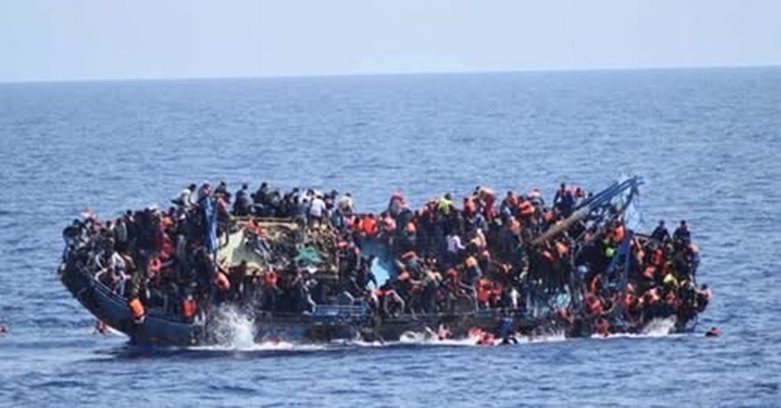
Meanwhile, Africa faces a crisis that should have commanded America’s moral leadership: the mass death of young migrants on the Atlantic and Mediterranean routes. Thousands of African youths die each year attempting the “backway” journey, fleeing unemployment, climate stress, and collapsing opportunities.
And now, another tragedy: a migrant boat carrying young Gambians has vanished in the Atlantic. Families wait for word. Mothers listen for a ring that never comes. Fathers watch empty doorways. A nation mourns. These were not adventurers but young people fleeing despair, running toward a world that never looked back.
The United States could have chosen a different approach. It could have focused on youth employment, supported climate adaptation in the Sahel, expanded legal migration pathways, and worked with African institutions against trafficking. Instead, its attention is fixed on reasserting dominance in its own hemisphere.
We are entering a new era—one that looks disturbingly like the world before 1945, when great powers carved up regions into spheres of influence and called it ‘order’. The revival of the Monroe Doctrine is not a return to stability. It is a return to hierarchy.
We are at a crossroads: great powers redraw borders while the powerless grieve. The United States has prioritized hegemony over humanity, force over partnership, and doctrine over dignity. Gambians who vanished are casualties of this order, children from a continent rich in promise but abandoned. Their dreams sank beneath the waves, unseen by the architects of strategy and power.
Fatoumatta: History will remember. When Africa’s children cried from the ocean, the world’s strongest nation revived an empire, not a hand. The true cost of this new dominance was not oil or doctrine, but the young lives lost on the way home.