
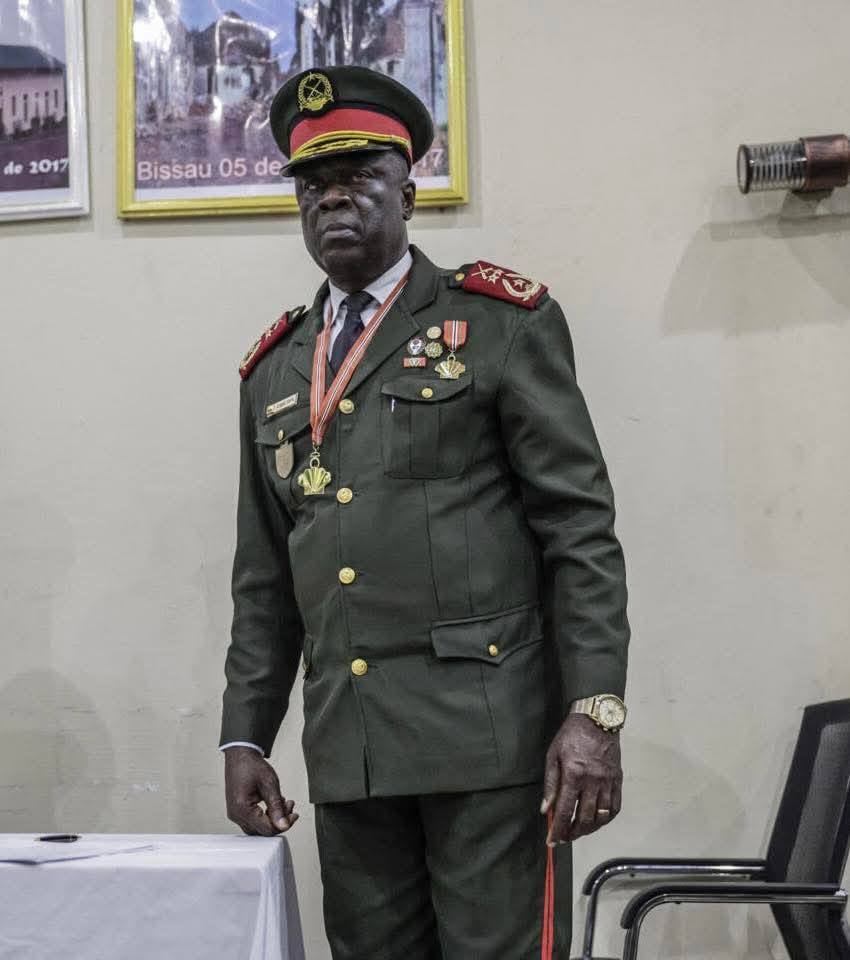
Fatoumatta: Guinea-Bissau’s coup in November 2025, marking the ninth in West and Central Africa in a mere five years, starkly reveals the region’s precariousness and the dangerous convergence of military power with organized crime. Often labeled as a ‘narco-state,’ Guinea-Bissau functions as a key transit hub for cocaine trafficking between Latin America and Europe, highlighting how regional instability is fueled by drug cartels operating within military structures.
The case of Rear Admiral José Américo Bubo Na Tchuto illustrates this critical nexus. Arrested in a U.S. DEA sting in 2013 for plotting transatlantic cocaine routes, he eventually returned to Bissau and was implicated in a failed coup attempt in 2022. His trajectory underscores how military figures involved in narco-politics destabilize governance and threaten regional stability, with repercussions extending into neighboring countries like The Gambia during Yahya Jammeh’s regime.
Guinea-Bissau’s ongoing crisis not only threatens its own stability but also has significant regional and international security implications, as transnational crime and weakened democratic institutions in West Africa can destabilize neighboring countries like The Gambia, Senegal, and Guinea. Recognizing these broader consequences is crucial for policymakers and security analysts aiming to develop comprehensive strategies against narco-politics in the region.
A former diplomat poignantly stated, “Poor Bissau… the military operates as just another form of organized crime.” This underscores how military involvement in trafficking networks severely undermines governance, urging the international community to recognize the need for immediate action.
A former diplomat poignantly stated, “Poor Bissau… the military operates as just another form of organized crime.” This highlights the alarming reality of military complicity in drug-related politics, which destabilizes governance and security, urging the international community to act decisively.
Fatoumatta: The sub-region has witnessed this troubling pattern before. Under Yahya Jammeh’s presidency in The Gambia, the infamous Rear Admiral José Américo Bubo Na Tchuto, chief of Guinea-Bissau’s navy, became synonymous with the drug trade. In 2013, he was apprehended in a U.S. DEA sting operation off the West African coast, facing grave charges of orchestrating a scheme to import cocaine from Latin America into Guinea-Bissau for distribution to Europe and North America. Convicted in the United States, he served four years in prison before returning to Bissau. In a troubling turn of events, he was arrested again in 2022 for his involvement in a failed coup attempt, an act that the sitting president directly attributed to the pervasive influence of the transatlantic drug trade.
While The Gambia itself served as a trafficking hub during Jammeh’s rule, Bubo’s arrest occurred outside its borders. Nonetheless, his case powerfully illustrates how narco-politics in Guinea-Bissau destabilizes the entire sub-region, ensnaring neighboring countries like The Gambia in the murky web of cocaine trafficking and its dire consequences.
Fatoumatta: Guinea-Bissau’s slide into narco-politics reflects the vulnerabilities that The Gambia experienced under Jammeh. Both countries have become corridors for cocaine, with their institutions weakened by corruption and militarization. The key difference is that in Guinea-Bissau, the military itself became part of the drug cartel.
In contrast, while trafficking flourished in The Gambia under authoritarian rule, the military did not overtly seize power in the name of the cartels. African elders advise, “When your neighbor’s roof is on fire, fetch water for your own.”
The instability in Guinea-Bissau poses a threat not only to itself but also to The Gambia and the entire West African coastline. The lesson is clear: when military forces become intertwined with drug cartels, no border is strong enough to contain the consequences. The recent Africa-EU summit in Luanda addressed governance standards, yet a fundamental question lingers: who better to define them than Africans themselves? When privileged elites profit from drug trafficking while ordinary citizens bear the brunt of suffering, Africa’s governance is effectively held hostage by ruthless cartels.
Fatoumatta: International partners may denounce coups, but their efforts will remain hollow unless they proactively challenge the narco-economy sustaining these regimes through targeted sanctions, intelligence sharing, and capacity building. Supporting efforts to address the root causes of governance failure linked to drug trafficking can empower global citizens to contribute meaningfully.