
By Alagi Yorro Jallow
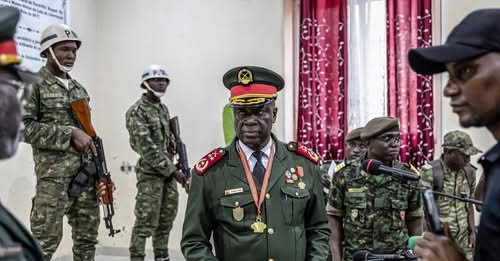
Fatoumatta: The joint statement issued by the African Union Election Observation Mission, the ECOWAS Election Observation Mission, and the West African Elders Forum following the November 2025 coup in Guinea-Bissau highlights the diplomatic evasions that have often characterized crises in West Africa. While the communiqué praised the people of Guinea-Bissau for their civic engagement and condemned the coup, it failed to address the military directly or demand their immediate return to the barracks. In contrast to ECOWAS’s decisive intervention in The Gambia in 2017, where ECOMIG forces pressured Yahya Jammeh into exile, the response to the situation in Guinea-Bissau relied on vague statements and cautious language. This inconsistency undermines ECOWAS’s credibility and encourages military adventurism throughout the region.
The statement’s praise for the “orderly and peaceful conclusion of voting” feels disingenuous when the military has suspended the electoral process and detained electoral officials. By concentrating solely on the logistics of voting, the missions overlooked the fundamental issue: the usurpation of civilian authority. Instead of issuing vague calls for calm, the statement should have demanded the immediate restoration of the electoral process and insisted that disputes be resolved in court rather than with violence.
Showing diplomatic restraint in the face of blatant illegality is not prudence; it is an abdication of responsibility. The hypocrisy becomes even clearer when we compare Guinea-Bissau’s situation with ECOWAS’s previous actions in The Gambia. In 2017, when Yahya Jammeh refused to concede power after losing to Adama Barrow, ECOWAS did not hesitate to mobilize ECOMIG forces. Troops were deployed to Banjul, Jammeh was threatened, and ultimately, he was forced into exile. That intervention was framed as a defense of democracy, but it bypassed the legal and constitutional processes that could have resolved the electoral dispute. ECOWAS opted for military force over judicial resolution. In contrast, in Guinea-Bissau, where both the incumbent and opposition candidates prematurely declared victory, ECOWAS has retreated into diplomatic platitudes. The double standard is glaring: forceful intervention when it is convenient, and diplomatic evasion when it is not.
Fatoumatta: The inconsistency in responses to military coups is not confined to The Gambia. In Mali, ECOWAS initially condemned the 2020 coup but quickly shifted to negotiating transition timelines with Colonel Assimi Goïta, effectively legitimizing his rule. In Niger, after General Abdourahmane Tchiani seized power in 2023, ECOWAS threatened military intervention but ultimately failed to act, allowing the junta to consolidate its authority. These examples reveal a troubling pattern: ECOWAS oscillates between threats of force, cautious diplomacy, and negotiated compromises, depending on political convenience and regional pressures. Such selectivity signals to military leaders that coups may be tolerated if regional bodies avoid confrontation, while citizens perceive that democracy is defended inconsistently, eroding trust in institutions. The most glaring omission in the joint statement regarding Guinea-Bissau is its failure to emphasize the importance of respecting the people’s vote. By focusing on stability and calm, the missions risk sidelining democracy itself. Respecting the will of the people requires resolving electoral disputes legally, not through military means. Anything less is a betrayal of democratic principles.
The joint statement should have explicitly demanded the military’s withdrawal from politics, called for the continuation of the electoral process under international supervision, and outlined clear consequences for non-compliance, such as targeted sanctions against coup leaders and their networks. Without such explicit measures and enforcement mechanisms, the communiqué risks being perceived as a hollow gesture instead of a principled defense of democracy.
Fatoumatta: The recent coup in Guinea-Bissau is not an isolated incident; it is part of a troubling trend in the region. Since 2020, West Africa has experienced six successful coups, each one encouraging the next. The selective interventions by ECOWAS (Economic Community of West African States) have weakened deterrence and fueled military ambitions. If regional organizations are genuinely committed to preserving democracy, they must act consistently, decisively, and in accordance with their own precedents. The solution lies not in empty statements but in principled interventions that respect the sovereignty of the people and reject double standards. West Africa deserves leaders who uphold democracy, not institutions that hide behind diplomatic language while coups proliferate.
For ECOWAS and the African Union to regain credibility as guardians of constitutional order, they must eliminate the double standards that have marked their interventions. The precedent set by The Gambia in 2017 illustrated that decisive action is indeed possible. Still, the retreat into diplomatic platitudes following the coup in Guinea-Bissau shows that such determination is applied unevenly.
Fatoumatta: This inconsistency undermines trust among citizens and encourages military leaders to believe that regional bodies will hesitate to confront them. The first step is to ensure consistency. ECOWAS cannot justify military interventions in one case while limiting itself to symbolic statements in another. A principled approach requires treating all unconstitutional seizures of power with equal seriousness, regardless of a country’s size, language, or geopolitical significance.
The second step is to demand the military’s withdrawal from politics and the restoration of civilian authority. Clear expectations and consequences in joint statements can inspire hope that regional organizations are serious about defending democracy.
Equally essential is the strengthening of judicial and electoral processes. Disputed elections should be resolved through the courts and independent commissions, rather than by military intervention. ECOWAS should invest in regional judicial capacity and electoral integrity to ensure that disputes are handled transparently and fairly. This approach would minimize the temptation for military forces to exploit political crises. When sanctions are applied, they should target coup leaders rather than the general population. Broad sanctions often exacerbate poverty and fuel populist rhetoric, unintentionally reinforcing military rule. By focusing sanctions on military elites, ECOWAS can diminish their hold on power without punishing ordinary citizens.
Lastly, it is crucial to empower civil society to hold both civilian leaders and military forces accountable. Regional bodies should support independent media, civic education, and grassroots organizations that defend democratic norms.
Fatoumatta: The recent coup in Guinea-Bissau is a reminder that democracy in West Africa remains fragile. The joint statement released afterward highlights the dangers of hypocrisy and inconsistency. If ECOWAS and the African Union (AU) want to stop the spread of coups, they need to act with clarity, courage, and consistency. The solution lies not in empty statements but in principled intervention, respect for the people’s sovereignty, and a strong commitment to good governance. West Africa deserves leaders who actively defend democracy, not organizations that hide behind diplomatic language while coups continue.