
By Ousman A. Marong.
Torn between her love for her children and fears arising from community rumours about the ‘dangers of vaccines,’ 49-year-old Fatou Manneh refused to vaccinate her children.
“As a Muslim, I was concerned that the vaccine could affect my girls’ ability to bear children,” the mother of four from Medina Kanuma village in the Kerewan Administrative Region of The Gambia said in Mandinka, her local dialet.
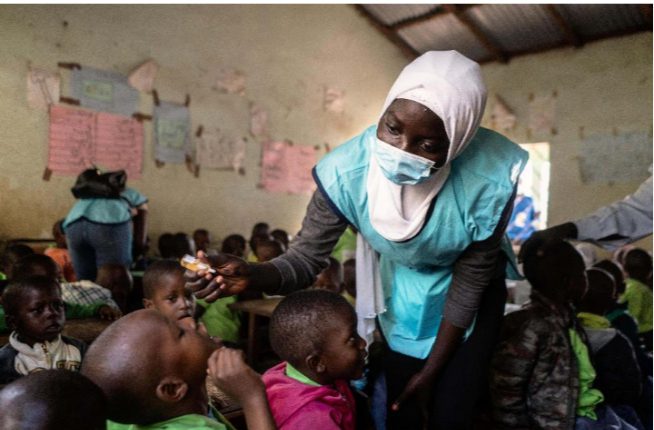
At schools, being warned by their parents not to accept vaccines, “students would run away” when they sighted immunisation officers, said Ousman Sidibeh, cluster monitor for schools in the North Bank Region. “Others would not come to school if they knew they would be vaccinated.”
Low vaccination, fueled partly by widespread religious misconceptions and ignorance about vaccines, has long plagued the West African country, resulting in permanent disabilities and high death rates from vaccine-preventable diseases like measles, polio, cholera, and meningitis among under-five children. As of 2020, the country’s child mortality rate stood at 48.9 per 1,000 live births, higher than the global average of 37 per 1,000 live births.
Although the mortality rate in The Gambia is lower than those of several sub-Saharan African countries like Chad (101 per 1,000 live births), Nigeria (105 per 1,000 live births), and Niger (115 per 1,000 live births), it is still worrisome for a country of just 2.8 million people.
Taming the fear
Seeking to avoid a national health disaster, in 2021, the health ministry launched multi-layer engagement campaigns to educate the population about the safety of vaccines, address concerns, and increase the rate of vaccine acceptance for better health outcomes.
The campaigns involved dismantling religious and cultural myths through collaboration with local community, religious, and traditional leaders; training healthcare workers to mobilize and provide quality immunisation services; organizing outreaches to schools, parents, and students; and collaborating with international organisations like the World Health Organization (WHO), GAVI, and UNICEF to drive mass vaccination.
As awareness campaigns coursed through schools to build trust in teachers and students, School Management Committees (SMCs) and mothers’ clubs served as intermediaries between parents and schools.
During parent-teacher association (PTA) meetings, vaccinated kids were brought to testify before fellow students and parents about how they felt about their health.
“I have been vaccinated, and it has had no negative effect on me,” Awa Mass, headgirl of Essau Lower Basic School, told parents and students during a session at her school. “So I would say the rumours and misconceptions against vaccines and vaccination are untrue.
But the project made sure to clarify that minor and temporary side effects could be experienced after vaccination.
“Yes, there might be minor side effects such as slight headache and dizziness. But these subside after one or two days, and it is normal. And not everyone vaccinated experiences it; a few may, and others may not experience it at all,” said Aja Kandeh, communication officer on vaccination at the health ministry.
As awareness spread, the ministry doubled efforts to make vaccines easily accessible, especially to under-five children requiring several doses in rural Gambia.
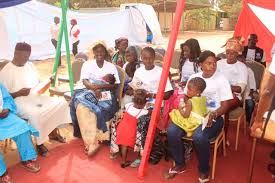
Spaces in communities were provided for a cluster of villages to bring their children for free monthly vaccinations and well-being check-ups. This took away the burden of parents having to pay heavy transportation fares to access vaccines at distanced healthcare centers. The campaign remained active until 2024, vaccinating against polio, measles, and other vaccine-preventable diseases.
“By engaging cluster monitors, school management committees, and peer health educators, the ministry has been able to disseminate information and promote vaccination programs effectively,” said Kandeh, the health ministry’s communication officer.
She said the campaign resulted in the vaccination of 424,573, representing 99.6% of the country’s child population. By 2024, the least coverage for most vaccines for children was 80%, compared to between 50% and 71% the years before.
“Many students and parents now understand the importance of vaccines. Some didn’t even know these were the same vaccines they had discussed during prenatal and antenatal care,” Sidibeh said.
Manneh, who initially refused to vaccinate her kids due to rumours in her community, is now one of the enlightened parents. She first encountered the program via a health-focused radio program on Niumi FM, gradually developing openness toward vaccination as her knowledge increased.
“I have four kids; two are vaccinated, and the other two were not vaccinated. I can attest that the vaccinated ones are healthier than the unvaccinated ones,” she said. “The unvaccinated ones were often sickly, but the vaccinated ones were always active, healthy, and with good eating habits.”
On March 24, 2025, the WHO, through its representative in The Gambia, Nathan Nsubuga Bakyaita, acknowledged the progress, praising the multi-level approach as “a lasting promise for every child.”
The government is now building on the progress, working with the WHO, through the Global Polio Eradication Initiative (GPEI), to reinforce the country’s disease monitoring systems and maintain its polio-free status through rapid vaccination by 42 district surveillance officers and 46 public health officers from key national health agencies.
By prioritising vaccination, families are now taking proactive steps to protect their health and financial stability.
While the approach has shown impact, with time, challenges such as delays in completing multi-dose vaccine schedules or outright dropouts due to distance to health centers and “vaccine financing and logistics” limitations persist and continue to hinder maximum outcome, said Kandeh.
But for families whose children have completed their schedules, vaccination means more than jabs, but reduced hospital bills and less stress.
“Every day, I am grateful for the ‘what ifs’ that never became realities. What if I hadn’t gotten them vaccinated? What if I had listened to the doubts and fears that once held me back? The weight of those questions is lifted off my shoulders because I made the choice to protect my children,” Manneh said.
“As a mother, I want to shield my kids from harm, and I am relieved that I took action to safeguard their health. The peace that fills my heart is thanks to the choice I made to vaccinate them. If I had hesitated or turned back, maybe things would be different and not for the better.”
Reporting by Ousman A. Marong – LamToro News.
This story was made possible by Nigeria Health Watch with support from the Solutions Journalism Network, a non-profit organization dedicated to rigorous and compelling reporting about responses to social problems, http://solutionsjournalism.org.