
By Kebeli Demba Nyima, Atlanta, USA
The editorial in Gambiana rightly captures the drama surrounding Ahmed Talib Bensouda’s abrupt retreat from the UDP flagbearer contest, but the deeper story lies in what comes next. And here, one must resist the temptation of easy romanticism about “going independent.” History, both British and Gambian, tells us that splintering from a party rarely leads to glory; more often, it consigns a politician to the margins.
In Britain, the ghosts of the Social Democratic Party of the 1980s still haunt Westminster. Four men of stature, Jenkins, Owen, Williams, and Rodgers, broke away from Labour to form a centrist alternative. Their rhetoric was lofty, their media buzz deafening, but the hard calculus of first-past-the-post politics crushed them. They ended up as footnotes, while Labour and the Tories marched on. Talib should take note: independence is a siren call that lures ambitious politicians into the rocks.
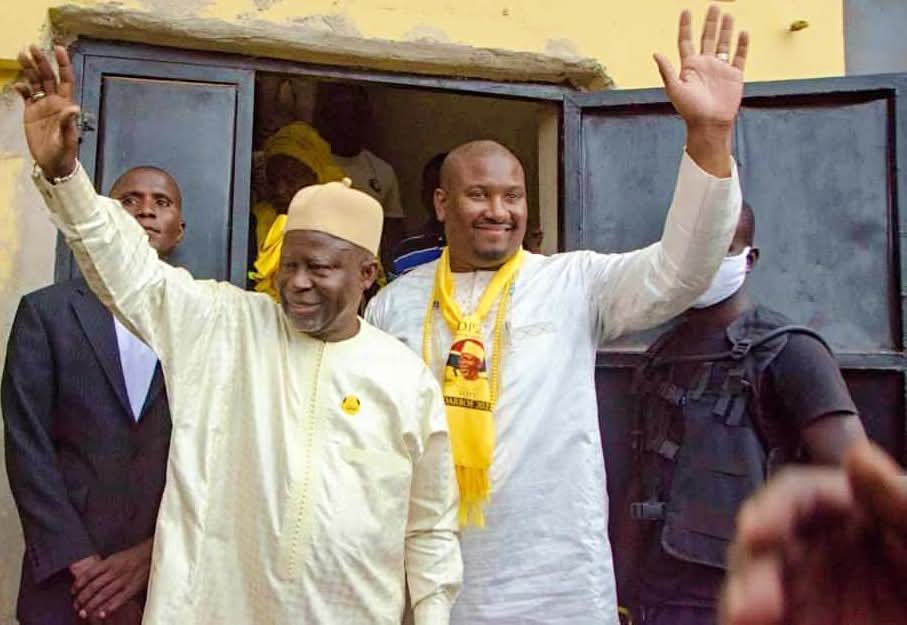
The UDP, for all its wrinkles, remains The Gambia’s most disciplined political machinery outside the state apparatus. Its roots are deep, its colours burn bright, and its leader, Ousainou Darboe, still commands unflinching loyalty despite electoral losses. Talib’s best strategy is patience. Darboe, now in his seventies, will not be at the helm forever. If he contests in 2026 and fails, the succession battle will open naturally, and Talib, still relatively young, could seize the mantle legitimately, without alienating the faithful.
To bolt now, to try to run as an independent, would be political suicide. It would fracture his base in the Greater Banjul Area, invite accusations of betrayal, and leave him stranded without the UDP’s organisational muscle. In political science terms, this is a question of path dependency: once a politician builds his brand within a party structure, his future is bound to that structure unless he wishes to dismantle his own credibility.
The irony is that Talib owes his entire career to the UDP. In 2018, when he was an untested novice, it was the party that propelled him into the mayor’s office. To now turn his back would be not only disloyal but also strategically foolish. Politics is not a sprint; it is a marathon. And the wise runner does not abandon the track at the halfway mark to blaze a lonely trail through the wilderness.
In short, Talib’s political dreams are not foreclosed by Darboe’s dominance. They are simply deferred. Britain teaches us that rebels without a cause fade quickly, while patient heirs to leadership often inherit the prize. Talib should bide his time, consolidate his record as mayor, and prepare for the post-Darboe era. If he dares to go solo, he risks not becoming The Gambia’s Emmanuel Macron but its David Owen.
Editor’s Note
This editorial was first published weeks before Ahmed Talib Bensouda formally launched his pressure group, the UNITE Movement. Like a seasoned weatherman who reads the political winds before the storm, the author foresaw the trajectory of a young politician whose ambitions were outpacing his discipline.
We republish it today as a reminder to the United Democratic Party (UDP) that Talib’s defection was not an isolated act of courage or conviction, but part of a recurring pattern in Gambian politics. Over the years, several figures, including Adama Barrow, Talib Bensouda, Momodou Sabally, Ebrima Dibba and Tombong Saidy, have treated the UDP as a launchpad for personal advancement.